What community donation crowdfunding is
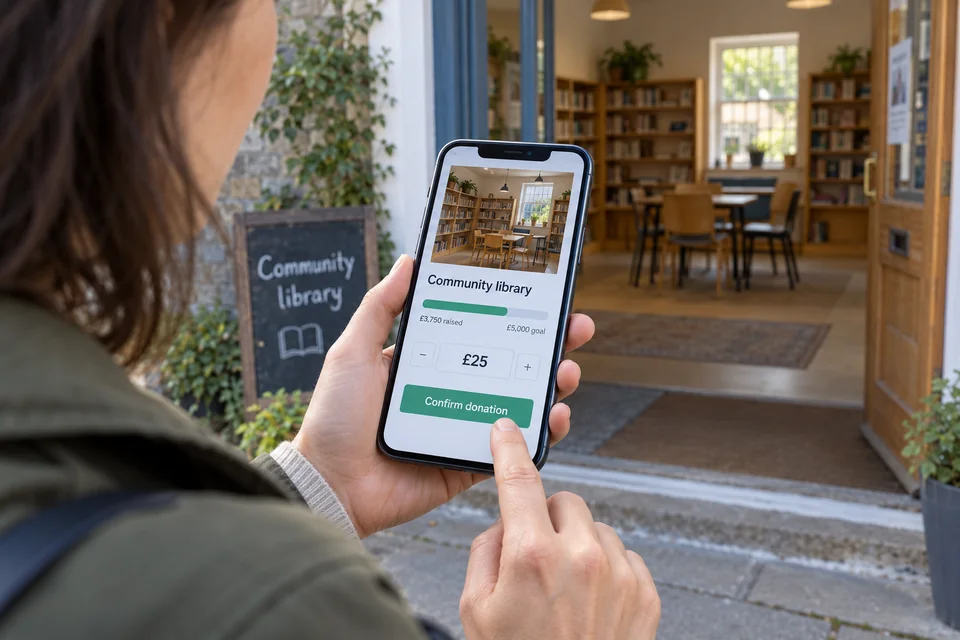
Community donation crowdfunding is a way for people who share a place to pay for something that improves it. A street, a village, a housing estate or a town centre becomes the cause, and the campaign is aimed first at the people who will use the result. Typical projects include keeping a small library open, mending a village hall roof, planting an orchard on spare land, buying equipment for a community café or restoring a bandstand.
Community crowdfunding works because of proximity. Residents can see the problem for themselves, they often know the organisers, and a gift of a few pounds feels like a contribution to something close at hand. That closeness also raises the bar for honesty, since the people running the campaign will keep meeting the people who gave.
Unlike an investment, a gift to a neighbourhood project does not produce a dividend, and unlike a loan it is not repaid. Supporters receive the benefit that everyone shares, perhaps a thank-you on a plaque or in a newsletter, and the satisfaction of having helped.
How neighbourhood crowdfunding differs from national appeals
Large national appeals depend on reach, while neighbourhood crowdfunding depends on relationships. A campaign for a local playground rarely goes viral across the country, and it does not need to. What it needs is a handful of committed organisers, a clear picture of the finished result and a message that spreads through school gates, parish newsletters, local social media groups and shop windows.
The scale of the target is usually modest and tied to a specific quote or plan. Organisers who can say that a named contractor has priced the work, and who show how the money will be spent item by item, tend to inspire more confidence than those who ask for a vague sum.
Offline activity matters as much as online. Coffee mornings, sponsored walks and collection tins at a village fete can feed into the same campaign page, so that every contribution counts towards one visible total. Mixing the two reaches residents who rarely use the internet, including many older neighbours with the strongest attachment to the place.
Who can organise a local cause campaign
Anyone may have the idea for community crowdfunding, but the person or group receiving the money needs a proper legal footing. A registered charity, a parish or town council, a community interest company, a community benefit society or a constituted association may each be able to collect funds for a local cause, and the rules that apply differ for each.
An informal group of volunteers should at least have written rules, a treasurer who is named and a bank account in the group's own name, never a private one. Platforms and funders often ask for these things, and donors reasonably expect them. A group that is a registered charity can find fundraising guidance from the regulator in its own nation.
The question of who owns the asset should be settled early. If the project improves land or a building, the owner's consent is essential, and the group should be clear about who will insure, maintain and manage it once the money has been spent.
Permissions, planning and practical groundwork
A community crowdfunding campaign can raise the money and still stall if the groundwork is missing. Building works, changes to public space and new play equipment may need planning permission or other consent from the local planning authority, and listed buildings or conservation areas bring extra controls. A conversation with the local council before launch can save months.
Insurance is a second concern. Public liability cover may be needed for a new facility, and events held to support the campaign may need their own cover and, in some cases, a licence. Safeguarding policies are important wherever children or vulnerable people will use the finished space.
- Obtain written consent from the landowner or building owner.
- Ask the local council whether planning permission or other approval is needed.
- Get at least one written quotation so that the target is realistic.
- Agree who will insure and maintain the project once it is complete.
Choosing a platform for local cause crowdfunding
Several platforms serve local cause crowdfunding in the United Kingdom, and they are not interchangeable. Localgiving is aimed at small charities and community groups. Crowdfunder has hosted community campaigns and has worked with councils and funders that sometimes add money to local projects. Spacehive has focused on civic projects such as parks and public buildings, often with local authority involvement. GoFundMe and JustGiving are general platforms that also host community pages.
When comparing options, look at who is eligible to open a page, how and when funds are released, whether an all-or-nothing rule applies if the target is not reached, and whether the platform helps with Gift Aid for eligible charities. Some funders restrict their match funding to particular platforms, so it is worth asking before choosing.
Whatever the choice, keep the campaign link in one place and use it consistently. Scattered links split the total and make it harder for residents to see progress.
Gifts, Gift Aid and local match funding
A gift to a local group is not automatically tax-efficient. Gift Aid is available only when the recipient is a registered charity or another body recognised for that purpose, such as a registered community amateur sports club, and when the giver pays UK tax and has signed the required declaration. HMRC explains the current conditions, and any group should read them before telling supporters that Gift Aid will be claimed.
Local match funding can strengthen community donation crowdfunding. Some councils, housing associations, businesses and grant-makers offer to add to money raised by residents, which gives donors an extra reason to give early. Terms vary, and matched money often comes with conditions about spending and reporting, so organisers should read them closely.
Anything promised in return should stay modest and clearly described. If a supporter is offered a significant personal benefit, the gift may no longer be a pure donation, and tax treatment can change.
Keeping a neighbourhood campaign honest
Honesty comes more easily to neighbourhood crowdfunding, because everyone can check. State the purpose, the target, the deadline and what will happen to money that is left over or cannot be spent as planned. If the project fails or costs more than expected, tell supporters directly rather than hoping they will not notice.
Publish regular updates, thank donors in the places where residents already look, and keep simple accounts that two trusted people have checked. When the work is done, invite supporters to see it. A small opening event or a plaque turns a financial transaction into shared pride.
Rules about fundraising, data protection and tax change over time. The relevant charity regulator, the Fundraising Regulator and HMRC provide current guidance, and local councils or voluntary sector support bodies often give free advice to community groups.
Frequently asked questions
Do we need to be a registered charity to start local cause crowdfunding?
Not always. Many informal groups fundraise lawfully, but they need a constitution, a treasurer and a group bank account, and they must not suggest charitable status they lack. Only registered charities can claim Gift Aid.
What happens if a community donation crowdfunding campaign misses its target?
That depends on the platform and the campaign settings. Some return all gifts when the target is missed, while others release whatever was raised. Organisers should explain the rule clearly before anyone gives.
Can a local council or business add money to residents' donations?
Sometimes. Councils, funders and companies occasionally offer match funding to local campaigns, usually with conditions on how the money is used and reported. Ask your local authority or voluntary sector support body about what is currently available.
Do we need permission before spending the money?
If the work changes land or buildings, you will usually need the owner's consent and possibly planning permission or other approval. Check with the local planning authority before you start raising money.