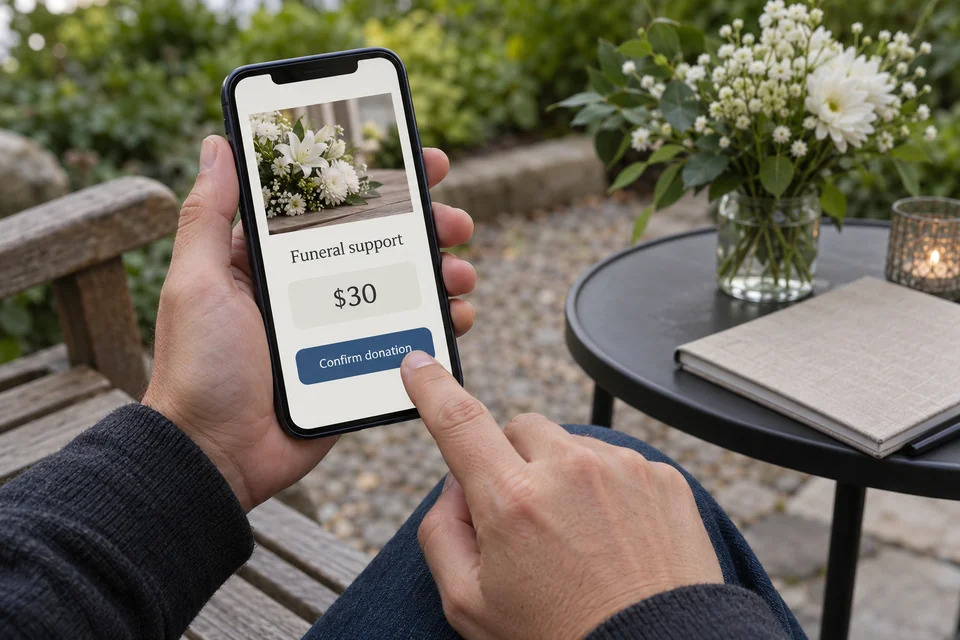
Understanding memorial donation crowdfunding
Memorial donation crowdfunding is an online appeal that gathers voluntary gifts to pay for a funeral or a lasting tribute. It grows out of an old custom: when someone dies, neighbours bring food and money, congregations take up a collection, and workplaces pass round a card. A funeral fundraiser makes that custom visible to people who live too far away to attend.
Nothing is offered to donors in exchange. They do not become part-owners of a memorial, nor do they lend money to be repaid. The only link between giver and recipient is care, and that is exactly why honesty about the use of the money matters so much.
A funeral donation appeal usually runs for a short period, often while arrangements are still being made, and many close once the funeral bill has been met.
Which costs a funeral fundraiser can cover
Funerals bring a cluster of expenses at once. There are charges for the funeral director, the coffin or casket, the burial plot or cremation fee, the officiant or religious service, flowers, transport and notices. Families who must repatriate a body from abroad, or who hold a ceremony in a different country from where the person lived, face further costs.
Some funeral crowdfunding campaigns also look beyond the day itself: a headstone or plaque, a bench in a park, a donation to a hospice or a scholarship in the person's name. A memorial can therefore combine paying off the funeral bill with a lasting gesture.
- Funeral director and ceremony costs
- Burial or cremation fees
- Transport, including bringing someone home from abroad
- A headstone, plaque or tribute chosen by the family
Whatever the purpose, a funeral donation appeal should state which costs it covers so that givers know what their gift supports.
Why people give to a stranger's funeral
Most donors knew the person who died or know someone close to the family. A colleague, a former pupil, a member of the same club or a friend from a faraway city may not be able to be present but still wants to help. Giving online is a way of taking part in the mourning that would otherwise be out of reach.
Sudden and young deaths, deaths in accidents and deaths of people who gave much to their community often draw a wider response, because the loss feels shared. In those cases the family may be surprised by the number of messages left alongside the gifts, and those messages can be a source of comfort.
Givers to a funeral fundraiser respond best to a plain account of who has died, who is organising the appeal and what has to be paid. Excessive detail about the circumstances of death is not needed and may cause distress to relatives.
Setting up a funeral fundraiser with care
Begin by deciding who will run the campaign. It is usually a close relative or a friend chosen by the family, who has agreed to take responsibility for the money. If someone outside the immediate family starts the page, relatives should know about it and approve it.
Write a short tribute, a description of the costs, and a clear statement of who will receive the funds. Attach the funeral director's quotation if the family is comfortable doing so; it shows that the amount requested is real. Choose a photograph the family is happy to see online, and think about privacy before naming a place or time for the service.
Check what the platform allows. GoFundMe and similar services have separate rules for personal campaigns, and some memorial-specific services exist as well. Their terms change, so read the current conditions about eligibility, fees and withdrawal before posting.
Finally, plan the payment route. Funds paid straight to a funeral director are easiest for donors to trust, but many platforms pay a named person, who should then settle the bill and keep the receipts.
Public support, savings and what donations do not replace
A funeral fundraiser is only one source among several. Some people have a funeral plan, life insurance, a bereavement benefit through work or a burial society or trade union fund. In many countries the state provides help for those on low incomes: in the United Kingdom, the Department for Work and Pensions administers a Funeral Expenses Payment, and Scotland has its own scheme, while local councils may arrange a simple funeral where no one else can. Eligibility rules change, so check with the responsible authority.
It is useful to know what estate or insurance money will be available before launching an appeal, because the person who died may have left funds that cover some or all of the cost. In some places a bank can release money from the deceased person's account to pay a funeral bill, a point worth raising with the bank.
A funeral donation appeal can fill what remains uncovered, but donors should not be led to think their gift is the only support the family has.
Tax, estates and the use of leftover money
Donations for funeral costs are generally not tax deductible for the donor, and charitable relief schemes are meant for registered charities, not private households. Anyone wishing to give with tax relief should instead consider a gift to a charity in the person's memory, which many families name in death notices as an alternative to flowers.
For the recipient, tax and legal treatment of gifts varies widely. The money may be treated as a gift to a relative, as a contribution to the estate, or as something else, depending on the country and how the appeal is framed. A solicitor, an accountant or the national tax authority can say how the rules apply.
Decide in advance what will happen if more is raised than the funeral costs. Common choices are a donation to a charity chosen by the family, a memorial bench or a gift to children left behind. Telling donors beforehand prevents later misunderstandings.
Fake obituaries and other scams to watch for
Grief makes people generous and sometimes less cautious, and unscrupulous people know it. Some pages invent a death or copy a real obituary and steal the photograph of a person who died. Others are started by someone with no connection to the family who then keeps the money.
Before giving, look for a link from a death notice, a funeral director's page or a post by a known relative. Check that the name of the organiser matches someone connected to the family, and ask a mutual friend if you are unsure. Avoid paying by gift card or any route outside the platform.
Families should keep an eye on their own funeral crowdfunding pages too, and report any copy that appears elsewhere to the platform so that it can be removed.
Updating donors and closing the appeal gently
A short thank-you note on the page after the funeral is usually enough. It tells donors that the service took place, that the bill has been paid and what happened to any remainder. For many people, this closure is as important as the gift itself.
Do not feel obliged to post often. Grief has its own pace, and a family may prefer to appoint a friend to deal with messages and the final accounting. Once the campaign has done its job, ask the platform how to close it, so that no further gifts arrive for a purpose that no longer exists.
Handled with honesty and restraint, memorial donation crowdfunding lets a community share a burden at one of the hardest times in a family's life.
Frequently asked questions
Is it appropriate to ask for money for a funeral?
Yes, many families do, and donors generally understand. What matters is honesty: say clearly what costs are being covered, who will receive the money and what will happen to anything left over once the bill is settled.
Who should run the appeal?
Ideally a close relative or a trusted friend the family has agreed on. If someone else starts the page, the relatives should approve it, and the organiser should be ready to account for how the funds were used.
Can the state help with funeral costs?
Often, for people on low incomes. In the United Kingdom the Department for Work and Pensions runs a Funeral Expenses Payment, and Scotland has a separate scheme. Rules change, so confirm with the authority before relying on it.
What if more money arrives than the funeral costs?
Decide beforehand and tell donors. Many families give the surplus to a charity in the person's name or use it for a headstone or bench. Being open about this avoids doubt and keeps the appeal trusted.