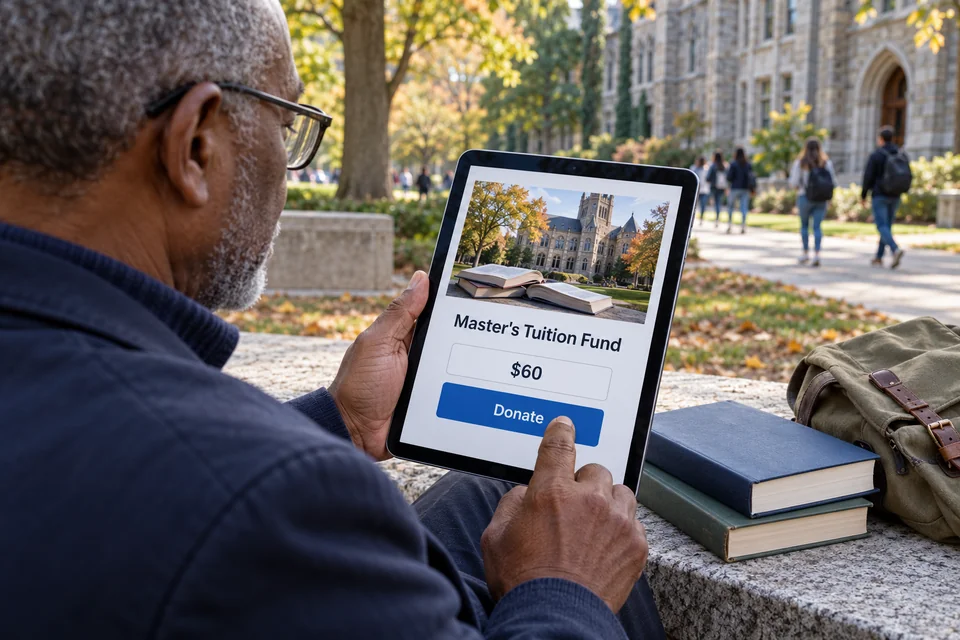
What crowdfunding for a master's degree involves
Crowdfunding for a master's degree is a way of gathering many small gifts from people who believe in a particular student's plans. The student writes a short account of the course, the university and the costs, sets a target and shares it. Donors give freely, and no one expects repayment or a share of future income.
Postgraduate study is a good illustration of why people turn to this route. Tuition for a one-year or two-year taught course, together with accommodation, travel and materials, can exceed what a student has saved, while many funding schemes cover only part of the cost or require the student to be accepted first.
It is worth being clear about what donations are not. They are not a loan, so nothing accumulates as debt. They are not an investment, so donors have no claim on the student's later salary. They are a gift from people who want to see someone study, and they work best as one piece of a wider financing plan.
Who tends to give to a student fundraiser
Supporters of a master's student are usually people who have watched the student's progress: relatives, former teachers, employers from placements, and members of a community or faith group that has followed the family. They give because they know the student and can imagine the result.
Strangers are much harder to attract. Crowdfunding for a master's degree that relies on public sympathy alone needs an unusual story, such as a first-in-family student, a course tied to a public need, or a scholar from a place with few opportunities. Even then, the page must be specific and credible.
Former classmates and alumni networks of the student's undergraduate institution can also be a source of support. A short message that explains the course, why it was chosen and what it will make possible gives them a reason to share the appeal.
Making the case for postgraduate crowdfunding
Postgraduate crowdfunding depends on a clear account of why this course, at this university, matters. Donors are not experts in the field, so the student should explain in plain language what will be studied, what skills it builds and how the student intends to use them, whether in a profession, in research or in public service.
The page should show that the applicant is committed. An offer letter, a place on a waiting list or a record of applications already completed gives donors proof that the course is real. If the offer is conditional, the page should say so and explain what happens to the money if the place is not confirmed.
- Name the course, the institution and the start date.
- Break down the costs: tuition, housing, books and travel, where the student has a written estimate.
- Explain what other funding the student has already arranged, so donors see the gap.
Writing the account in the student's own voice, without inflated claims about future success, is more persuasive in postgraduate crowdfunding than polished marketing.
Placing master's degree fundraising among other funding
Master's degree fundraising rarely stands alone. Most students combine several sources: personal savings, part-time work, scholarships and bursaries, employer sponsorship, and sometimes a government-backed postgraduate loan where one exists. The university's funding or financial aid office can explain which of these apply.
In the United Kingdom, for example, the Student Loans Company administers a postgraduate master's loan for eligible students, and in the United States the federal student aid office handles applications for loans and some grants. Eligibility rules vary and change, so the official pages are the place to confirm them.
Showing donors that gifts will fill a gap, not cover everything, builds trust. A student who has already applied for scholarships and secured part of the money looks organised, and donors feel their gift completes a plan and does not carry the whole load.
What happens to financial aid and taxes
Gifts from the public can interact with other support. Some funding bodies ask students to report money received from outside sources, and in certain systems gifts may be counted when a student's needs are assessed. A student already receiving aid should ask the funder how gifts will be treated before starting master's degree fundraising.
For donors, a gift to an individual student is generally not tax-deductible, since the student is not a registered charity. Gifts made to a university's own scholarship fund are a different matter: the institution may be able to issue a receipt, and the donor's tax authority sets the rules on relief.
Tax rules for the student differ by country. Some systems ignore small gifts from family and friends, while others apply thresholds or conditions. Speaking to the university's advice service or to the national tax authority is a sensible step.
Choosing a platform and a timeline
Not every platform accepts education appeals, and the terms differ in how quickly funds are paid out and what happens if the target is missed. A student should read the platform's rules carefully, check that payments can be sent to a personal account in the right country, and understand the fees that apply before the page goes live.
Timing matters as well. University deadlines for tuition deposits and visa evidence can be strict, so a student should work backwards from the date when money is needed. A campaign launched after the deadline has passed may arrive too late to help.
A plan for what happens if the full target is not reached prevents panic. Many students funding a master's degree set a smaller first target, such as a deposit, and a larger stretch target, and tell donors openly how any shortfall will be covered.
Keeping donors informed through the course
A campaign does not end with the last gift. Supporters appreciate a message when the place is confirmed, another when the course begins and a short summary of what was learned. These updates need not be long, but they should be honest and warm.
Students who share a dissertation topic, a field trip or a graduation photograph give donors a feeling of shared achievement. Those who vanish after receiving the money make it harder for anyone to support the next student in the family or community.
Where a donor asks for no recognition, that wish should be respected. Others may enjoy being named in a thank-you message, so it is wise to ask permission before mentioning anyone publicly.
Avoiding scams around education funding
Education appeals attract fraud because people want to help students. Fake master's degree fundraising pages may use another person's offer letter or photographs. Donors should look for a named student, a named institution, consistent details and some contact with someone who knows the family.
Students and families should be wary of anyone who offers to arrange a scholarship, loan or visa for a fee in advance. Genuine funding bodies and universities do not ask applicants to pay a stranger to secure money, and they publish official channels for applications.
If a student suspects a fraudulent copy of the appeal, the platform should be told straight away, and followers should be directed to the correct link through the student's own accounts.
Frequently asked questions
Can I use crowdfunding for a master's degree if I already have a loan?
Yes, many students combine sources. Mention the loan and any other funding on the page so donors see the remaining gap, and check whether the lender or funding body wants to be told about gifts.
Will donors be repaid?
No. A donation is a gift, so there is no repayment, interest or share of future income. A student may thank supporters and share news about the course, but should not promise anything of financial value in return.
Are gifts to a student tax-deductible for the donor?
Generally not, because the student is a private individual and not a registered charity. Donors wanting relief might consider giving to a university scholarship fund instead, and should ask their national tax authority about the rules.
What if I do not get a place on the course?
The student should state in advance what will happen. Options include returning the money, switching to another course with donors' agreement, or using it for a later intake. Clear wording at the start prevents disputes.