What crowdfunding for a start-up means in practice
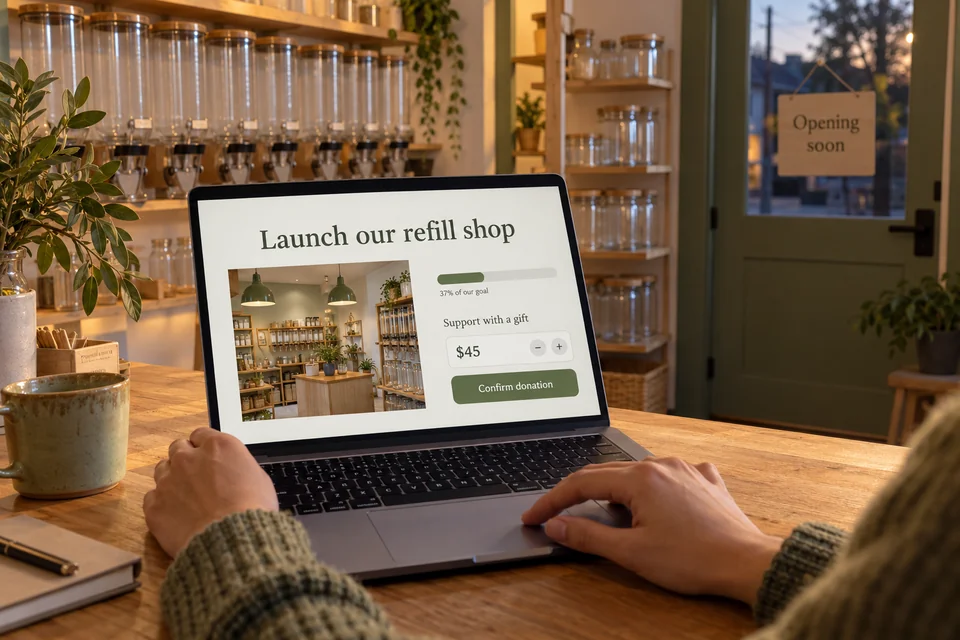
Crowdfunding for a start-up by donation is the simplest form of early backing: a founder explains the plan, a supporter gives, and the transaction ends there. There is no certificate, no dividend and no promise of a payout. The gift is closer to a vote of confidence than to a purchase or an investment.
That distinction shapes everything else. Because donors take no financial stake, they cannot ask for a say in how the company is run, and the founder owes them honesty, thanks and progress reports instead of returns. A venture that wants to hand over a share of future profits has moved into a different kind of crowdfunding with its own financial regulation.
Start-up crowdfunding of this type has traditionally suited projects with a social or community flavour, such as a neighbourhood refill shop, a repair cafe or a local food initiative, where supporters want the project to exist even though they will never see a dividend.
Which ventures can use start-up crowdfunding
Donors respond when a venture promises something they would like to see in their own community or when they know the founder personally. A zero-waste shop that will open on a street people already use is easy to picture. A software tool with an abstract benefit is far harder to promote through crowdfunding for a start-up.
A realistic founder asks whether the idea has a public-spirited side. Environmental, educational, cultural and neighbourhood ventures are more likely to attract donations than purely commercial products whose main benefit goes to the owner.
Some platforms restrict or forbid appeals for profit-making businesses, and others welcome them with conditions. Reading the platform's rules before preparing the page saves wasted effort and avoids having the campaign taken down halfway.
Presenting the idea without overpromising
A founder's page should answer three questions quickly: what is being created, why it matters to the people reading, and what the gifts will pay for. Simple language and a clear picture of the finished venture work better in start-up crowdfunding than a long business plan.
Honesty about stage is important. A project that has only a prototype should say so, and a project that has not yet found premises should not imply that a lease has been signed. Statements about future sales, customers or income are best left out, since nobody can guarantee them and donors may remember the claim later.
- State what exists today: a prototype, a trial run, a signed agreement or only an idea.
- Explain the first concrete step the money will make possible.
- Introduce the people involved, with their real names and relevant experience.
A short video or a handful of authentic photographs make the founder easier to trust than polished advertising graphics.
Budgeting start-up fundraising honestly
Start-up fundraising works best when the target covers a defined first stage rather than the whole dream. A figure for equipment, a deposit and the first batch of materials can be backed by quotes. A figure that tries to fund two years of living costs raises doubts and rarely succeeds.
A breakdown also helps donors choose how much to give. If one amount clearly pays for a piece of equipment, supporters can picture their gift as part of that purchase. It should still be said that all gifts go into the same pool and that no donor is buying an item.
Founders should be ready for the campaign to raise less than hoped. A fallback plan, such as a smaller version of the launch or a second source of finance, should exist before the appeal begins, and it is fair to tell donors how the plan changes if the target is missed.
Building a first community of supporters
Most early gifts to a start-up crowdfunding page come from people who already know the founder: family, former colleagues, neighbours, and customers from a previous job. A personal message to each of them, written before the page goes public, makes a stronger start than a broadcast announcement.
A page that already shows a few gifts looks more credible to strangers than an empty one. Asking a small circle to give in the first day or two gives the campaign momentum and shows later visitors that real people stand behind it.
Local organisations can widen the audience. A neighbourhood association, a co-working space or a business network may be willing to share a short description, provided the founder explains clearly that the appeal is for donations and not for investment.
Legal and tax points when funding a start-up by donation
Money received from donors can raise accounting and tax questions for the new venture. In some places gifts to a business are treated as taxable income of that business, while gifts to an individual may be handled differently. The answer depends on the country and on the legal form chosen, so an accountant should be consulted early.
Donors giving to a private venture should not expect tax relief. Relief for gifts is generally tied to registered charities and similar bodies, which a commercial start-up is not. Where a project is run through a registered non-profit, the position can be different and the relevant charity regulator can explain it.
Founders should also keep in mind that promising returns or a share of ownership may bring a campaign under financial promotion or securities rules. The national financial regulator, for instance the Financial Conduct Authority in the United Kingdom or the Securities and Exchange Commission in the United States, publishes guidance on this boundary.
Donation, reward, equity and loan compared
Donation-based support gives the founder money with no obligation to repay or to deliver anything. Reward-based campaigns offer a product or experience to backers, and the founder then owes delivery. Equity crowdfunding sells a stake in the company and is tightly regulated, and loan-based crowdfunding creates a debt that must be repaid with interest.
Each option suits a different founder. Someone whose project appeals to neighbours may do well with gifts. Someone with a product to sell may do better with a reward campaign that doubles as a first customer test. Someone who expects profit and needs substantial capital will usually look at investors or lenders instead of crowdfunding for a start-up.
Choosing a model honestly matters, because mixing them in one appeal confuses donors and can create legal problems. A clear label on the page, such as a statement that all gifts are voluntary and carry no return, removes doubt.
Keeping supporters after the launch
A donor who supported a venture in its first weeks usually wants to see what happened. A short note when the doors open, the first batch is made or the first customer arrives turns one-off donors into long-term friends of the business.
Setbacks should be reported with the same openness as successes. If the opening is delayed or the plan changes, an early message explaining why does far more for trust than silence followed by a late apology.
Thanking supporters publicly, with their permission, and inviting them to the opening keeps the relationship warm. It also creates the first customers and advocates, which is worth more to a new business than any single gift from start-up fundraising.
Frequently asked questions
Do donors become owners of the start-up?
No. A donation is a gift, so donors receive no shares, no voting rights and no share of profits. If founders want to offer ownership, that becomes equity crowdfunding, which is regulated separately and needs advice from a qualified professional.
Can a purely commercial start-up use donations?
It can try, but donors give most readily to projects with a community, social or cultural benefit. Some platforms also restrict appeals for profit-making businesses, so founders should read the platform's rules before preparing a campaign.
Will founders pay tax on the funds raised?
It may be, depending on the country and on whether the venture or an individual receives it. Founders should speak to an accountant and read the guidance of the national tax authority before the appeal goes live.
What if the target is not reached?
It depends on the platform: some let the founder keep what was given, others return it. Founders running start-up crowdfunding should read the terms, prepare a smaller first stage as a fallback, and tell donors plainly how the plan would change.