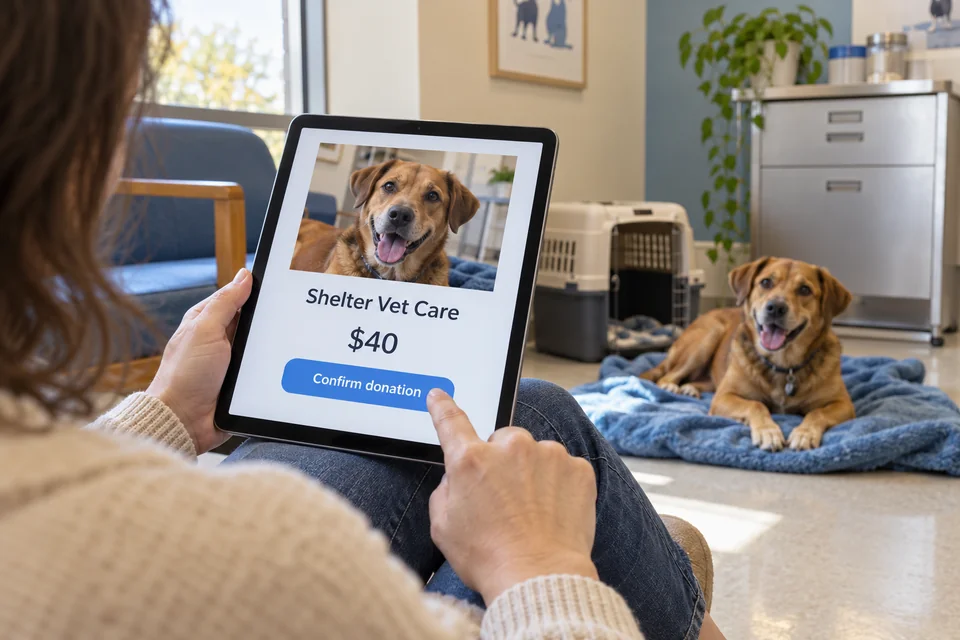
What donation crowdfunding in Spain covers
Donation crowdfunding in Spain covers online campaigns in which supporters give money to a cause and receive nothing in return except the satisfaction of helping. In Spanish the practice appears under words such as donativo, micromecenazgo and recaudación de fondos, and in Catalonia, the Basque Country and Galicia local-language equivalents are common.
The causes behind donation crowdfunding in Spain are wide-ranging: rare-disease research, hospital equipment, food banks, support for migrants, animal shelters, environmental clean-ups, community cultural spaces and help for families affected by disasters. Many campaigns are tied to neighbourhood networks, parishes, schools and regional identity as much as to national charities, and a local appeal often travels furthest among people who know the place.
A donation differs from lending or investment crowdfunding. The latter are financial activities with their own rules, whereas a gift carries no repayment, no interest and no ownership.
Law 49/2002 and the tax incentives for gifts
Spanish tax incentives for charitable giving rest on Law 49/2002 on the tax regime of non-profit entities and tax incentives for patronage, known as the mecenazgo law. It sets out which foundations, associations and other bodies qualify and what tax advantages donors may obtain.
Individuals and companies who make donations in Spain to a qualifying entity can obtain a deduction, and the Autonomous Communities may add their own incentives on top. Percentages and limits are set by law and revised, so they are not listed here. The Agencia Tributaria publishes the current figures and procedures.
A gift to an individual's personal fundraiser does not enjoy this treatment, because the recipient is not a qualifying entity. A donor who wants the benefit should give to a registered non-profit and request the donation certificate.
Certificates and the Modelo 182
The practical side is paperwork. The organisation issues a certificate showing the donor's details, the amount and the date, and it reports donations to the tax authority through an annual informative return known as Modelo 182. This allows the tax office to match what donors claim with what charities declare.
That is why accurate donor details matter. A donor who gives under a nickname or without an identification number may not be able to claim relief later, even if the money reached a qualifying body.
Donors using a platform should check whether the platform transfers the money to a qualifying entity and who issues the certificate. If the information is not clear, ask the organisation before paying, not afterwards.
Platforms for fundraising in Spain
Fundraising in Spain is supported by a lively set of platforms. Goteo is a Spanish network for social, cultural and technological projects with a commons focus and mixes donations with collective returns. Migranodearena specialises in solidarity projects for non-profits, Teaming popularised small recurring gifts, and Verkami, born in Catalonia, is best known for creative projects. GoFundMe operates in the Spanish market too.
Large organisations, among them Cruz Roja Española, Cáritas, Médicos Sin Fronteras and the food banks, run their own online donation pages and emergency appeals. Fundación ONCE supports people with disabilities, and many regional foundations use the same tools.
Each platform publishes its own fee structure, payment partners, verification process and rules for beneficiaries. They change, so a donor and an organiser should read them before committing.
Where the financial regulator fits in
Spain's Law 5/2015 on promoting business financing regulates participatory financing platforms, which handle investment and loan crowdfunding and are supervised by the Comisión Nacional del Mercado de Valores, the CNMV, and in some respects the Bank of Spain. Donation campaigns are not the target of that regime.
The distinction helps anyone giving in Spain. If a project promises interest, equity or profit sharing, it is a financial product and the platform needs the appropriate authorisation. If it promises only a thank-you, it is a gift, and the relevant questions concern the receiving organisation instead.
Mixed models exist, where a supporter receives a small reward such as a thank-you card, a mention or a copy of the finished work. Read the terms carefully, because a reward changes the legal and tax character of the contribution.
Associations, foundations and who to ask
Associations are governed by Organic Law 1/2002 on the right of association and are registered, depending on their scope, at national or regional registers, with the National Register of Associations kept by the Ministry of the Interior. Foundations follow Law 50/2002 and are supervised by a protectorate, a public body responsible for overseeing foundations.
A donor who wants to check an organisation, for example before a large gift to a foundation, can look for its register entry, its statutes, its accounts and any declaration of public utility. A serious foundation or association publishes annual reports and contact details.
Informal groups raising money for a friend or neighbour are a common sight in fundraising in Spain and often well meant, but they lack the legal safeguards of registered bodies, so giving to them is a matter of personal trust.
Bizum, cards and other ways of giving in Spain
Donors pay online by credit and debit card, bank transfer and, increasingly, by Bizum, the mobile payment service linked to bank accounts and widely used among friends. Some charities and platforms accept Bizum for donations, and many display a clear IBAN for transfers.
Because Bizum is quick and easy, it is also used in scams that imitate relatives or charities. A donor should confirm that the recipient shown on the screen is the intended organisation and should avoid sending money to unknown numbers after a message that creates pressure.
Keep the confirmation, and ask for a certificate when you want to claim tax relief, since a screenshot of a payment alone rarely satisfies the organisation or the tax office. Online donations in Spain should leave a trail you can show a tax adviser.
Emergencies, solidarity and avoiding scams
After the floods that struck the Valencia region in October 2024, solidarity campaigns appeared across the country, from organised collections by Cruz Roja Española and Cáritas to local groups and individuals. Such moments of giving in Spain show both the generosity of Spanish donors and the speed with which fraudulent pages can appear.
Basic precautions are worth repeating, and they apply to every form of donations in Spain. Use the official channels of recognised organisations, avoid transferring money to private numbers on the strength of a message alone, and check whether the beneficiary is named and the use of funds explained.
Donors can report suspected fraud to the platform and to the police, and can ask the Agencia Española de Protección de Datos about misuse of their personal data. Reliable donation crowdfunding in Spain depends on organisers who answer questions.
Frequently asked questions
Is a gift to a Spanish crowdfunding campaign tax deductible?
Only when the recipient is a qualifying non-profit entity under Law 49/2002 and the donor holds a valid certificate. Gifts to a private individual's fundraiser are not covered, and the Agencia Tributaria publishes the current conditions.
What is the Modelo 182?
It is the annual informative tax return in which non-profit organisations report the donations they received and the donors' details. It lets the tax authority match claims with declarations, so give your correct identification number if you want relief.
Does the CNMV supervise donation campaigns?
The CNMV supervises participatory financing platforms for investment and lending under Law 5/2015, not charitable gifts. For donations, look at the receiving organisation's registration, its accounts and the tax rules for non-profit entities.
Is giving through crowdfunding an investment?
It is not. Contributors to a donation campaign receive nothing back, whether money, interest or a share in anything. Should a campaign hold out financial returns, it is a different kind of product, and the platform would need the proper authorisation, which you should verify.