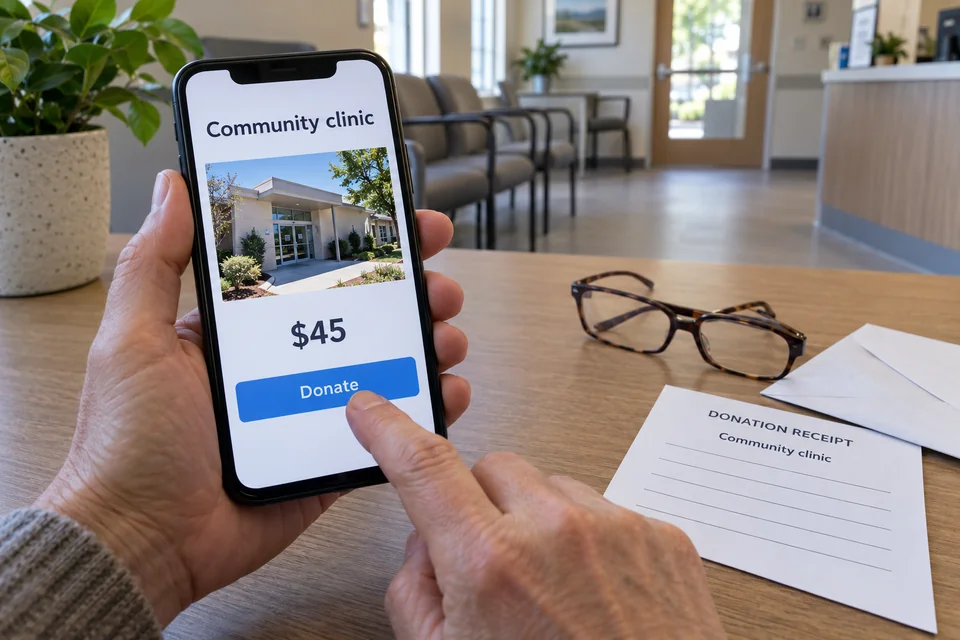
What donation crowdfunding platforms actually do
Donation crowdfunding platforms are the intermediaries between an organiser and the people who give. They provide a page template, a payment system, tools for sharing and updates, and a process for paying the money out. Many also check who the organiser is, hold funds until identity is confirmed and give donors a way to report suspicious pages.
Choosing among donation crowdfunding platforms is more than a design preference. The platform decides which countries a campaign can serve, how quickly funds arrive, what the donor sees at checkout, whether a charity can issue receipts through the system and what happens if a campaign breaks the rules. Those choices outlast the first week of a campaign.
A useful way to think about fundraising platforms is as three layers. The visible layer is the page and the sharing tools. The financial layer is payment processing, currency and payout. The compliance layer is identity checks, content rules and, for charities, receipts. A strong platform handles all three without drama; a weak one is polished on the surface and vague underneath.
Matching fundraising platforms to the kind of organiser
Some fundraising platforms were built for personal appeals. GoFundMe is the widely recognised example, used for medical costs, emergencies and tributes in many countries. Others concentrate on charities and sponsored events: JustGiving is strongly associated with charity pages in Britain, and CanadaHelps connects donors with registered Canadian charities.
A third group serves nonprofits that want their own branded giving pages. Givebutter and Donorbox offer tools for nonprofit online giving, including recurring gifts and event pages. A fourth group focuses on a market or a type of cause: Crowdfunder is used for community projects in Britain, HelloAsso supports French associations, betterplace.org focuses on social projects in Germany and Chuffed hosts causes in Australia and beyond.
The practical question about donation crowdfunding platforms is whether the platform's habits fit yours. A neighbourhood committee wants simple pages and a transparent way to receive money in the group's name. A national charity wants reporting, integration with its donor records and receipts. A student raising emergency funds wants speed and a mobile-friendly page.
Fees, tips and the small print on donation websites
Platforms earn money in different ways. Some charge the organiser a share of each gift, some charge only the payment processor's cost, some ask donors for a voluntary contribution at checkout and some sell subscriptions for nonprofit tools. Any one platform may combine several of these models, and they change over time.
For that reason, fees are best read on the platform's own pricing page on the day you decide. Check three things: what the organiser pays, what the donor pays, and whether the voluntary tip is presented as optional or pre-selected. Donors should also check whether the amount they intend to give reaches the cause in full or is reduced by costs.
Beware of any service that asks for an advance payment before it will release money, or that promises guaranteed results. Legitimate fundraising platforms do not charge up-front fees to unlock funds that supporters have already given.
Verification, payouts and how long money is held
Identity checks protect donors, even if they feel like friction for the organiser. Expect to supply a name, a date of birth and bank details, and perhaps a document, before the first payout. A platform may hold funds until verification is complete, and it may hold them longer if a campaign is reported or looks unusual.
The beneficiary matters as much as the organiser. Many platforms let the organiser name another person as the recipient, and they will want to confirm that the recipient's bank account is real and that the person knows about the campaign. For charities, payout normally goes to the organisation's verified account.
Before launching on any of the donation crowdfunding platforms, ask where the money goes, how long a payout takes in your country and what happens if the campaign is closed. A platform that explains these points in plain language earns more confidence than one that buries them.
Receipts, charity status and country coverage
If donors might expect tax relief, the platform needs to support it. In Britain, some services help eligible charities collect Gift Aid declarations. In other countries, the platform may pass donor details to the charity so that it can issue its own receipt. A personal campaign rarely qualifies for any of this, and honest platforms say so.
Country coverage deserves a direct check on every one of the donation websites you consider. A platform may accept donors from many countries but pay out only to certain ones, support only certain currencies or limit categories by region. Local payment methods, such as iDEAL in the Netherlands or Interac e-Transfer in Canada, can make a large difference to how many visitors finish a donation.
Language support matters too. Donors trust a page that speaks their language and uses the right local terms for charities and receipts. For specifics on charity status and tax treatment, the national charity regulator and tax authority are the authorities to ask.
Safety tools that donation crowdfunding platforms should offer
Safety features are part of the product. Look for a visible way to report a campaign, a clear policy on what is banned, a process for removing pages that mislead and a statement of what the platform will do if a donor believes they were deceived. Some services run guarantees for donors in cases of proven misuse, and the terms of any such guarantee should be read, not assumed.
Transparency helps as well. Pages that show who the organiser is, who the beneficiary is and when updates were last posted give donors the information they need. Platforms that allow donors to ask questions in public or message the organiser reduce the room for fraud.
Data handling is the quiet part. Donors should know what personal information the platform keeps, whether it is shared with the organiser, and how to ask for its deletion. These points are covered by data protection laws in many countries, and the national data protection authority is the place to learn more.
A simple routine for comparing platforms for online giving
Write down the purpose, the beneficiary, the countries your supporters live in and whether receipts matter. Shortlist two or three platforms for online giving that clearly serve that profile. Then read each one's help pages, not its marketing pages, on fees, verification, payouts and prohibited uses.
Run a small test. Open a draft page, look at the checkout as a donor would, and check whether it works on a phone, offers the payment methods your audience uses and shows the costs honestly. If you can, ask someone outside the project to attempt a donation and tell you where they hesitated.
Finally, record why you chose the platform. If a campaign later runs into difficulty, a short note of the terms you accepted will make it easier to deal with the platform's support team and to explain decisions to supporters.
Frequently asked questions
Which of the donation crowdfunding platforms is best?
None is best for everyone. Personal appeals, charity drives, community projects and nonprofit giving pages each suit different services. Compare audience, verification, payout rules, receipts and country coverage against your own purpose, and read the current terms on each platform's own site.
Do platforms charge fees on donations?
Often, though models differ: a share of each gift, payment processing costs, a voluntary donor tip or a subscription for nonprofit tools. Fees change, so read the platform's current pricing page and check what both the organiser and the donor will pay.
Can a platform guarantee that a campaign is genuine?
No platform can promise that. Identity checks and reporting tools reduce risk, but donors should still look for a named organiser, a clear beneficiary and specific updates, and use official charity registers to verify registered organisations.
Do I need a platform to collect donations online?
Not strictly, since an organisation can collect gifts on its own website through a payment provider. A platform adds a ready-made page, an audience and verification, which suits individuals and small groups that lack the technical or legal setup.