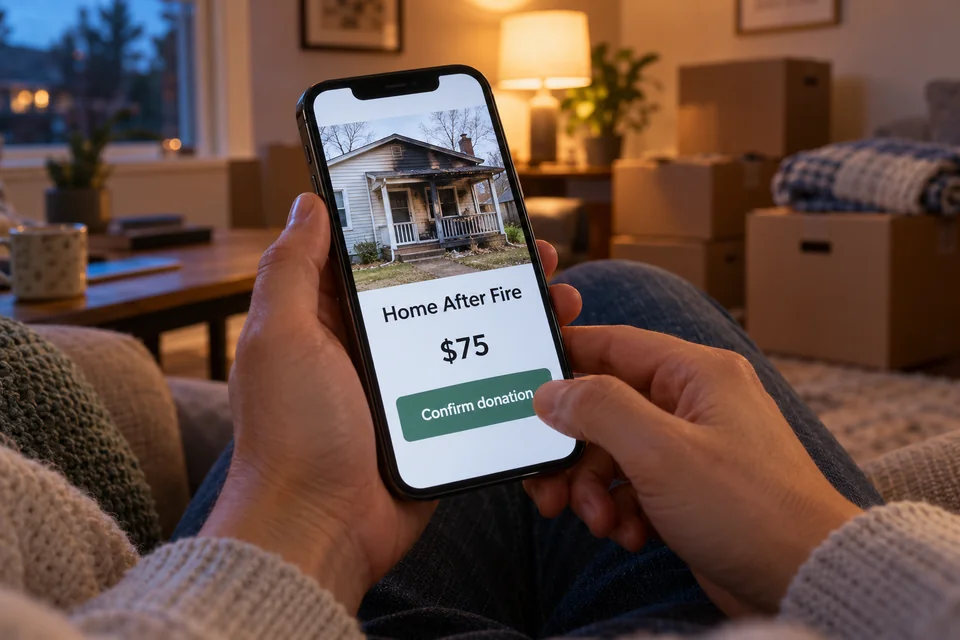
How donation crowdfunding in India works
Donation crowdfunding in India usually begins with a person or organisation opening a campaign page, writing the story, uploading supporting papers such as a hospital estimate, and sharing the link on WhatsApp, Instagram and Facebook. Supporters then give any amount they choose, and the platform passes the proceeds on after verification.
The model behind donations in India is a gift, not a financial product. Contributors do not receive shares, interest or a product, and they cannot expect their money back if the goal is missed or the situation changes. What they are entitled to expect is that the cause is real and that the money is used as described.
Sharing is the engine of fundraising in India. Most campaigns grow through chains of family, colleagues, alumni networks and neighbourhood groups, which is why a campaign with a clear photo, a plain explanation and regular updates tends to do better than one with a vague request.
Platforms for giving in India
Several platforms are well known in the country. Ketto, Milaap and ImpactGuru built their reputation on medical and personal fundraisers, while GiveIndia works with registered non-profits and lets donors support vetted organisations. Each has its own verification steps, eligibility rules and fee structure, which are published on its own site and change from time to time.
Individual campaigns and non-profit campaigns are different things. A campaign for one patient is a personal appeal, and the platform usually transfers the proceeds to the hospital or to the beneficiary. A campaign by a registered charity is run by an organisation with its own accounts and legal duties.
Before giving, compare how each platform describes its checks, whether it shows who receives the money, and what it says about refunds, withdrawals and unused funds. Choosing between donation crowdfunding platforms in India is mostly about trust and transparency, not about design.
Medical fundraising in India: the most common cause
Healthcare costs are the most frequent reason families turn to donation crowdfunding in India. Surgery, cancer treatment, transplants and long hospital stays can overwhelm household savings, and a crowdfunding page offers a way to reach a wide circle quickly. Hospital estimates, diagnosis letters and the treating doctor's details are the usual supporting evidence.
Donors can reasonably ask for that evidence. A credible campaign names the hospital, shows documents and explains what the money will cover. It also says what happens if more is raised than needed, since many families agree to redirect surplus funds to another patient or to the hospital.
Medical campaigns are not a substitute for health coverage or government schemes. Families should also check hospital welfare funds, state health programmes and insurance claims, and treat online fundraising in India as one source among several.
Section 80G, 12A and tax receipts for donors
Indian income tax law allows a deduction for certain gifts under Section 80G of the Income Tax Act, but only when the recipient is an approved institution. Charitable trusts and societies obtain registration under provisions such as Section 12A or 12AB, and approval for 80G is a separate matter. A donor who wants a deduction must give to an eligible organisation and obtain a proper receipt.
This is where personal campaigns differ in giving in India. Money given to an individual's medical fundraiser generally does not carry an 80G receipt, because the recipient is a person, not an approved institution. Where a non-profit is the beneficiary, the receipt and the organisation's PAN and registration details matter.
The rules on limits, modes of payment and documentation are set by the Income Tax Department and revised in budgets, so check the current position on the department's website or with a chartered accountant before relying on any deduction.
Foreign gifts and the FCRA
Foreign donations in India are governed by the Foreign Contribution (Regulation) Act, 2010, known as the FCRA, administered by the Ministry of Home Affairs. Organisations that receive foreign contributions generally need FCRA registration or prior permission and must report how the funds are used.
For a diaspora donor abroad, the practical lesson is to give to an organisation that can explain its FCRA status, or to use a platform that handles overseas contributions within the law. An individual who asks relatives abroad to wire money for a cause should understand that personal remittances and organised charitable receipts are treated differently.
The law has been amended more than once, so both donors and organisations should read the current notices from the Ministry of Home Affairs rather than rely on older articles.
UPI, cards and payments for donations in India
Payments are a strength of crowdfunding in India. The Unified Payments Interface, developed by the National Payments Corporation of India, lets donors pay from a phone in seconds, and cards, net banking and wallets are also widely supported. The Reserve Bank of India sets rules for the payment companies that handle the money.
Because UPI transfers are instant, they are also hard to reverse. A donor who sends money to a personal number after a message on social media may have no recourse if the story is false. Paying through a verified campaign page or a charity's official account, and keeping the transaction record, is safer.
Donors should avoid scanning QR codes sent in unsolicited messages and should confirm that the beneficiary name shown before payment matches the cause.
Registered charities, trusts and the NGO landscape
Fundraising in India rests on a large non-profit sector made up of public charitable trusts, societies and companies formed for charitable purposes. Trusts are generally regulated at state level, often through a Charity Commissioner or similar office, while societies register under state laws. NGO Darpan, a portal run by NITI Aayog, lists voluntary organisations and gives them a unique identity.
Companies above certain thresholds are required to spend on corporate social responsibility under the Companies Act, which has encouraged partnerships between businesses and approved charities. Those gifts follow separate rules from consumer crowdfunding.
For donors, the register of an organisation, its annual accounts and any tax approvals are the evidence of seriousness. A genuine charity will publish them.
Warning signs and how to give with confidence
Fraudulent appeals tend to share patterns: a heart-rending story with no named hospital, photographs copied from other cases, a request to pay into a personal wallet, and pressure to forward the message immediately. Disasters such as floods and cyclones bring out imitators within hours.
A few checks reduce the risk of fraud in donations in India. Search the campaigner's name and the hospital, read the updates, see who has already given, and contact the organisation through details you looked up yourself. If a campaign says it is run by a registered charity, look it up on the charity's own website.
Giving in India is generous by habit, and that generosity deserves reliable channels. When in doubt, support an established organisation, and report suspected fraud to the platform and to the police cyber-crime helpline.
Frequently asked questions
Can I claim a tax deduction for a medical crowdfunding gift?
Usually not. Section 80G applies to gifts made to approved institutions, whereas an individual's medical fundraiser is a personal appeal. If a registered non-profit is the beneficiary and issues a valid receipt, the position may differ, so ask the Income Tax Department or an adviser.
What is the FCRA and does it affect me?
The Foreign Contribution (Regulation) Act, 2010 regulates foreign gifts to Indian organisations and is administered by the Ministry of Home Affairs. It matters mainly to non-profits receiving overseas money, and to donors abroad who want to give through an organisation that holds the proper registration.
How do I know a fundraiser is genuine?
Look for a named hospital or organisation, supporting documents, regular updates and a payment route in the beneficiary's own name. Search for the person independently and contact the platform if the story seems inconsistent or the account details point to a private wallet.
Is a donation the same as an investment?
No. A gift earns no interest, shares or repayment, and the contributor cannot recover it if the campaign fails. Investment-style crowdfunding is a separate area handled under securities and lending rules, not under the rules for charitable giving.