What donation crowdfunding in Dubai actually means
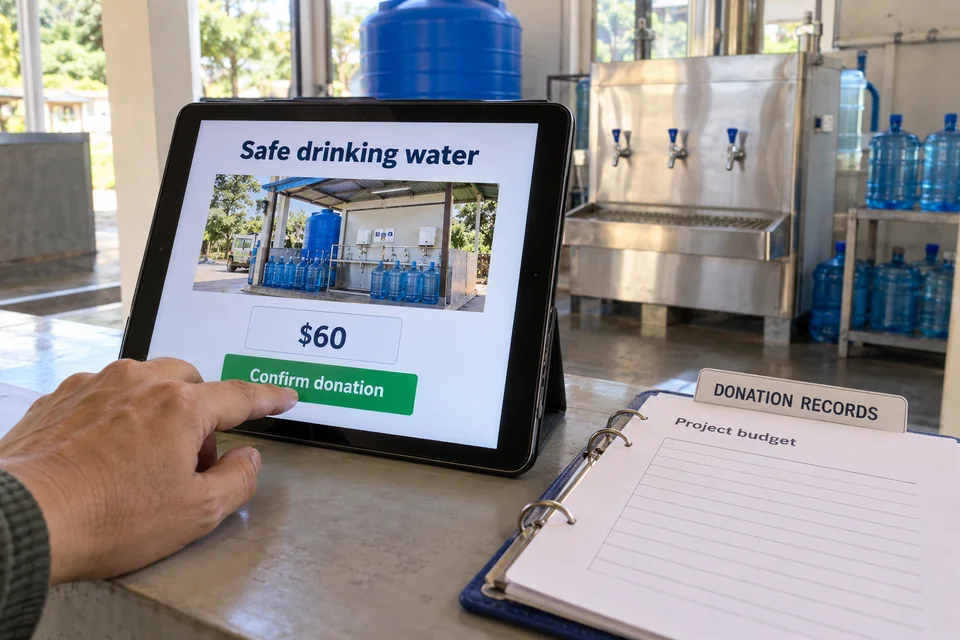
Donation crowdfunding in Dubai means gathering many modest gifts through a web page or mobile app for a defined purpose, such as a school building, a food programme, a hospital bill or relief after a disaster. Donors receive nothing back: no repayment, no shares, no product. The gift is simply a gift.
That separates it from the other crowdfunding families. Reward models promise a product, equity models offer ownership and lending models expect repayment with interest. Those three sit in financial or consumer regulation. A pure donation does not, which is why the questions that matter for donations in Dubai are about permission, trust and where the money ends up.
The emirate adds its own flavour. It is home to residents from a very large number of countries, many of whom send money abroad, and giving is closely tied to the calendar. Ramadan brings the busiest period, with zakat and sadaqah shaping what people give and to whom.
Who may collect: the licensing logic
The central rule is that public fundraising is not open to anyone with a social media account. In Dubai, the Islamic Affairs and Charitable Activities Department, known as IACAD, is the local body that licenses and supervises charitable activity, including the collection of donations. Federal legislation on regulating donations also applies across the United Arab Emirates.
In practice, an individual who posts a bank account number and asks strangers for money is acting outside the system, however sincere the story. Authorised charities and approved channels are the expected route for fundraising in Dubai, and appeals in public places or on social platforms without a permit can attract enforcement.
Rules and the bodies that apply them change over time, so anyone planning a collection should ask IACAD directly before launching, and donors who are unsure about a request can ask the same department whether the collector is recognised.
Fundraising in Dubai through established charities
Because individual appeals are restricted, the working model in the emirate is closer to charity-led giving with crowdfunding mechanics than to open personal pages. Established organisations run online donation pages and campaign pages where supporters can fund a named project.
Dubai Cares, created to support education in developing countries, is one of the best-known examples. Beit Al Khair Society and the Dubai Charity Association are long-standing local charities, and the Emirates Red Crescent takes part in domestic and international relief. Each describes its own programmes and ways to give on its official website.
For a donor, the benefit of this route is accountability. A recognised charity has a registered presence, a governing structure and reporting duties, so there is somebody to ask when a gift goes missing or a project stalls. That is the practical meaning of charity campaigns in Dubai: a named organisation stands behind each request.
Practical channels for donations in Dubai
Gifts are normally made in dirhams. Card payments, mobile wallets and bank transfers using the recipient's IBAN are the usual channels, and many charities also accept contributions at retail points, through text-message campaigns and on their own apps. The Central Bank of the UAE oversees the payments system behind these options.
Donors sending money abroad meet a second layer of rules. Transfers to other countries pass through banks and exchange houses subject to anti-money-laundering checks, and charities that distribute overseas generally work through approved channels rather than informal carriers of cash.
A sensible habit is to pay only into an account in the name of the charity itself, never into a personal account or a wallet belonging to an intermediary, and to keep the confirmation message as a record. Online giving in Dubai is convenient precisely because it leaves a digital trail, so use it.
Tax and receipts for gifts made in Dubai
The tax question for donations in Dubai looks different from countries where donors claim a deduction on a personal return. The UAE has not been built around a personal income tax, so there is generally no yearly deduction for an individual's gift in the way many readers know it from Europe or North America.
Businesses are another matter. A corporate tax regime was introduced at federal level, and qualifying public-benefit entities and charitable giving by companies receive specific treatment under it. Any company wanting to rely on that treatment should read the guidance of the Federal Tax Authority or ask an adviser.
Donors still benefit from a clean paper trail. Ask for a receipt that names the charity and the amount, because it proves where the money went if there is ever a dispute.
Spotting unlicensed appeals and scams
Fundraising in Dubai draws a busy mix of residents and visitors, and that mix attracts opportunistic appeals. Typical warning signs are an urgent story with no named organisation, a request to pay into a private account, pressure to act within hours, and a page that offers no way of contacting anyone in person.
A short routine helps. Look for the charity's name and licence details on its official site, reach it through contact details you found yourself rather than through the message that reached you, and see whether other established organisations mention the same project.
Remember that a campaign page being slick proves nothing. Anyone can build an attractive page in an afternoon, and an appeal that claims to be official but cannot be confirmed with the licensing authority should be treated as unlicensed until shown otherwise. Genuine donation crowdfunding in Dubai welcomes questions about who is behind it.
Choosing a cause: medical, education, relief and faith giving
Residents tend to give around a few recurring themes. Education support, food and water programmes, orphan sponsorship, medical aid and disaster relief all have established charities with online donation pages. Faith-based giving such as zakat, sadaqah and endowment-style gifts follows religious guidance and often has dedicated routes.
Individual medical emergencies are the hardest case. The emotional pull is strong, yet personal appeals sit outside the licensed framework. Families in that position are better served by approaching a recognised charity or the treating hospital's welfare office than by posting an open call.
Whatever the cause, fundraising in Dubai raises the same questions: who runs it, who authorised it, what will the money be used for, and how will supporters be told how it went.
Giving in Dubai across borders: expatriates and diaspora
A large share of the people living in the emirate come from elsewhere, and many want to support relatives, villages or disaster zones in their home countries. This produces a particular pattern of giving in Dubai: money leaves the country through licensed charities and regulated transfer providers, and the receiving side follows its own national rules.
That cross-border chain deserves care. A charity that operates abroad should be able to explain which local partner receives the money, how the funds are accounted for and what reports supporters will see. If the explanation is vague, wait.
Companies and employee groups also run workplace drives, a common form of giving in Dubai. These work best when channelled through a licensed charity, which can issue a proper receipt and report on results afterwards.
Frequently asked questions
Can an individual start a public online fundraiser in Dubai?
Public fundraising generally requires official permission, and in Dubai the Islamic Affairs and Charitable Activities Department licenses charitable collection. An individual posting an open appeal without authorisation may be breaking the rules, so ask the department before launching anything.
Is a gift to a Dubai charity tax deductible?
For individuals, the UAE has generally not relied on a personal income tax, so there is usually no annual deduction to claim. Companies may receive specific treatment under the corporate tax rules, and the Federal Tax Authority publishes the current guidance.
How can a donor confirm that a charity is genuine?
Find the organisation's official website, look for its licence details and contact it through numbers you found yourself. You can also ask the Dubai authority that licenses charitable activity whether the collector is recognised before paying.
Is donating online the same as investing in a project?
No. Donation-based giving carries no repayment, shares or reward, so donors should not expect anything back. Investment and lending models fall under financial regulation, which is a separate area from charitable collection.