How Saudi donation fundraising rules approach public appeals
Saudi donation fundraising rules start from a principle that differs from many Western systems: public collection of money for charitable purposes is treated as an activity that needs authorisation, not as something any person may start with a web page. Charity is deeply respected in the Kingdom, yet the state expects it to run through organisations that have been licensed and that report their accounts.
For a foreign reader used to open personal appeals, this is the most important point. An individual who posts a request for gifts on social media for a stranger's cause, or who collects money at a mosque or shop without permission, can fall foul of the rules even with entirely good intentions. The donation fundraising rules therefore reward patience and preparation.
Anyone who needs certainty about a specific case should ask the competent authority named below, since regulations in this field have been modernised in recent years. Reading the donation fundraising rules as a guide to safe giving, rather than as an obstacle, is the most useful attitude.
Which authorities supervise charitable fundraising
Non-profit organisations are overseen by the National Center for Non-Profit Sector, which was created to organise and develop the sector, working with the Ministry of Human Resources and Social Development. Charities typically receive their licence and operating conditions through that system, and a charity's licence number or official registration is the first thing a donor should look for. Together these bodies define the charity fundraising rules that licensed organisations follow.
The Saudi Central Bank, known as SAMA, regulates banks and payment providers, and the banking system applies its own controls to accounts used by charitable organisations. The Zakat, Tax and Customs Authority deals with zakat and tax matters, and the General Authority for Awqaf handles waqf, the endowment tradition. Saudi charitable fundraising also depends on these financial controls.
The Saudi Data and AI Authority is responsible for the national data framework and operates a central giving platform, which is described below.
Ehsan and other official giving routes
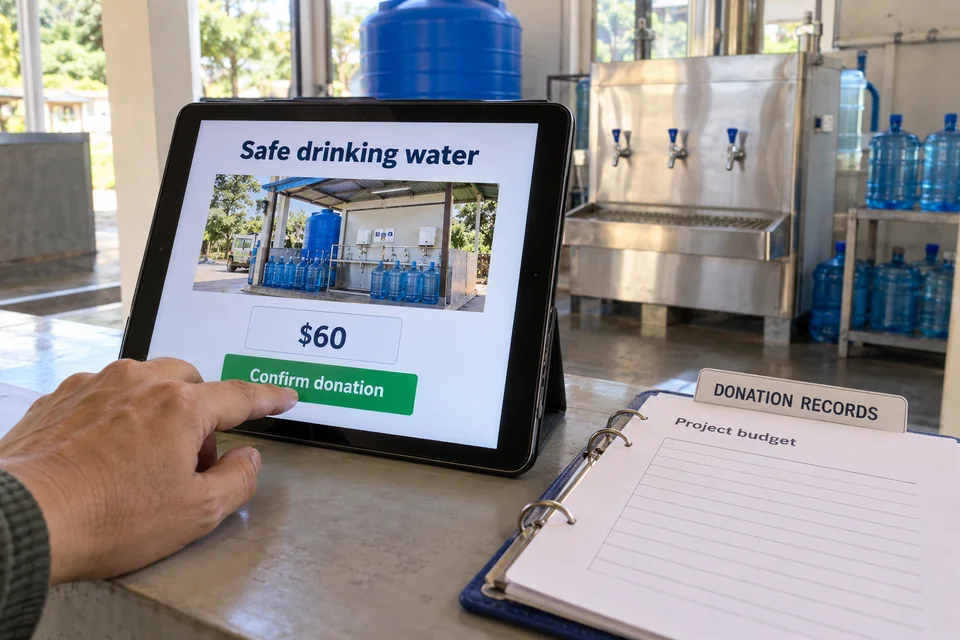
The best-known route for online giving is Ehsan, the national platform for charitable work launched under the Saudi Data and AI Authority. It lists approved charitable organisations and projects and lets donors pay by local methods. Because the platform is government-backed and shows which bodies are authorised, it solves a trust problem that individual crowdfunding pages face elsewhere.
Other official routes exist for specific causes. Jood Eskan, for example, is a national platform that gathers donations for housing support through authorised charitable bodies. Licensed charities, such as regional charitable societies and well-known foundations, also take donations through their own verified websites and apps.
For a donor, the practical lesson is simple: begin with an official platform or the verified site of a licensed charity, and be cautious about any link that arrives by message from an unknown sender.
Official giving routes also help with accountability. A government-backed list of authorised organisations makes it harder for imitation appeals to look credible, and it lets families, employers and schools that run collective giving choose a destination with confidence, instead of relying on a forwarded image or an unfamiliar account number.
Why licensed fundraising matters and unlicensed collection is risky
Collecting donations without permission can be treated as a breach of the regulations, and money raised in this way may be frozen or confiscated. The state also worries about misuse of funds and about the diversion of charitable money, which is why it requires traceable accounts and approved channels. Licensed fundraising keeps the money inside a regulated chain from the donor's bank to the final beneficiary.
An individual who wants to help a neighbour or a family in need can usually do so by approaching a licensed charity that handles cases of that kind, instead of organising a public collection. Giving privately and directly to a person is a different matter from soliciting the public at large, although local conditions can apply.
Companies and groups that want to support a cause as part of corporate social responsibility normally cooperate with a licensed charity and keep the contract and receipts in order. That is also how licensed fundraising protects the company's reputation.
Zakat, sadaqah and the religious dimension
Religious obligations shape the calendar and the content of giving. Zakat is the obligatory annual alms with defined recipients, sadaqah is voluntary charity that can be given at any time, and waqf is an endowment whose benefits continue. Many Saudi donors give most during Ramadan, and appeals tend to multiply in that month.
Because zakat has religious rules about who may receive it, many givers prefer an organisation that is known to distribute it correctly. Official platforms and licensed charities often explain which categories of gift they accept and how they are allocated. Such clarity is part of respecting the charity fundraising rules in spirit as well as in letter.
Online fundraisers should respect these concepts and describe a gift accurately instead of mixing categories, for example presenting a general project donation as if it were zakat.
Seasonal peaks bring extra risk. During Ramadan and Hajj season, imitation appeals spread faster than usual, so donors should stay with the same trusted channels they use throughout the year and ignore messages that urge them to act within hours.
Payments, identity and data protection
Saudi donors commonly pay by mada debit cards, Apple Pay, bank transfer and local wallets such as STC Pay, and the Kingdom's instant bank-transfer systems make small gifts easy. Authorised platforms use verified accounts, and some require identity checks through the national digital identity service. Under the donation fundraising rules, platforms must also respect the banking controls on charitable accounts.
The Personal Data Protection Law governs how names, phone numbers and payment details are collected and used, and charities that keep donor lists have to protect them. Donors can reasonably expect a clear statement of how their details are used and the ability to ask questions about them.
Sharing screenshots of receipts or personal stories should be done with care, especially when they identify beneficiaries, because privacy expectations are high.
Tax questions are handled by the Zakat, Tax and Customs Authority. Companies and individuals who expect a deduction or an accounting treatment for a gift should obtain a proper receipt from the licensed charity and ask the authority how the current rules apply, because requirements have developed over time.
How foreign readers and residents can give safely
Expatriates and visitors who wish to give in Saudi Arabia can use the same official routes as citizens. A resident with a local bank card can donate on Ehsan or through a licensed charity's app, and can keep the payment confirmation as a record. Charitable fundraising from outside the Kingdom follows the same logic of verified recipients.
Donors abroad who want to help a cause in the Kingdom should choose a registered charity or an international organisation operating there with the appropriate permissions, and should avoid sending money to an individual they cannot verify. If a request claims to represent a Saudi charity, check the organisation's name against official listings before paying. Official giving routes remain the most reliable option from abroad.
Anyone who receives a suspicious donation request can report it through official channels and to the bank, and should keep messages and payment details to support the report.
Frequently asked questions
Can an individual start a public online collection in Saudi Arabia?
Public collection normally needs authorisation, so individuals are generally expected to work through licensed charities and official platforms. Rules have been updated in recent years, so ask the National Center for Non-Profit Sector before launching anything.
What is Ehsan?
Ehsan is the national platform for charitable work run under the Saudi Data and AI Authority. It lists authorised charities and projects and allows online donations by local payment methods, which gives donors a verified way to give.
How can I tell if a charity is licensed?
Look for its official licence or registration details, use its verified website or app, and compare it with listings on official platforms. If you cannot confirm it, ask the National Center for Non-Profit Sector.
Does zakat have special rules online?
Zakat has religious conditions about recipients, so choose organisations that state clearly how zakat is allocated. The Zakat, Tax and Customs Authority handles the tax and zakat framework, and scholars can advise on religious questions.