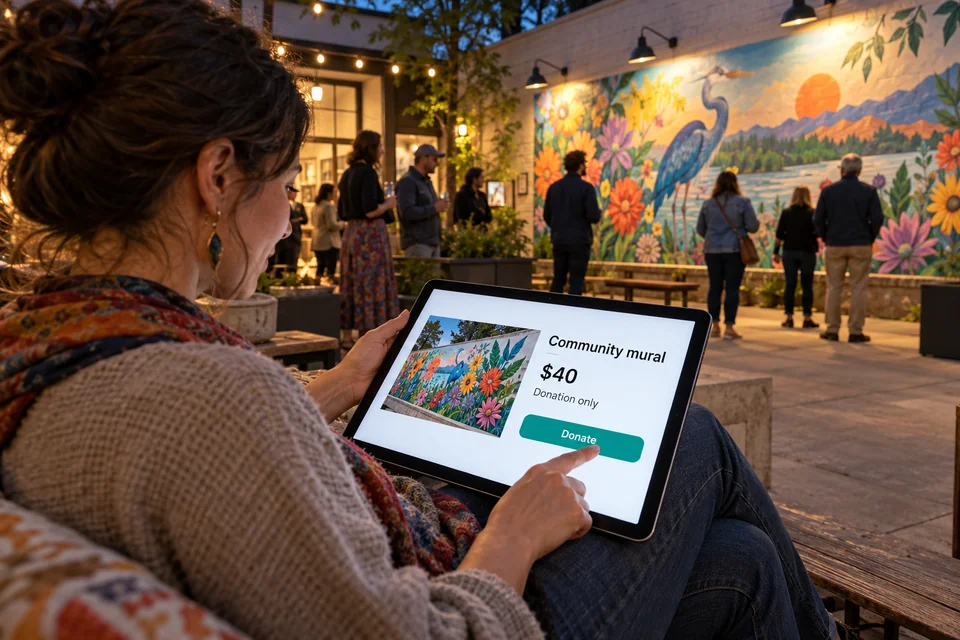
What creative donation crowdfunding is
Creative donation crowdfunding is a way of paying for artistic work by inviting the public to give small amounts towards it. The project may be a mural on a gable wall, a community theatre production, an outdoor sculpture trail, a local history film, a youth orchestra tour or a street festival. Each person who gives helps the work exist, and the finished result is usually shared with the public.
What sets it apart is the absence of a financial promise. Supporters are not buying shares in a film or lending money to a studio, and nobody is told that the project will turn a profit. A gift is made out of enthusiasm for the idea, and the only expectation is that the organisers will do what they said.
Creative donation crowdfunding suits public creative work particularly well, because that plain basis fits it. Murals, performances and exhibitions often benefit people who never donate, and a campaign can describe that wider benefit honestly without suggesting a return to the giver.
Arts crowdfunding compared with reward and equity models
Arts crowdfunding takes several shapes, and it helps to separate them. In reward models, such as those popular for books, albums and games, backers receive a copy of the finished work or another item in return. In equity models, people buy a stake in a creative business and hope to share in its profits. In donation models, nothing of that kind is offered.
The distinction matters for tax, regulation and trust. Where backers receive substantial goods, the payment is closer to a purchase than a gift. Where investment is offered, financial promotion rules apply, and the Financial Conduct Authority regulates the area. A donation campaign should avoid language that blurs these lines.
Some projects use more than one model, for example a charity raising donations alongside a separate shop selling art. If so, each activity should be described separately so that supporters know what they are paying for.
Who can raise money for a public creative project
Anyone with a project can begin arts crowdfunding, but the legal setting shapes what comes next. A registered arts charity, a community interest company, a constituted group of artists or a school can all collect gifts in their own name. An individual artist raising funds for a personal project is receiving income, which has tax consequences, and a gift to a private person is not eligible for Gift Aid.
Many artists partner with an established organisation. A theatre, a community arts charity or a local council arts team may agree to host the funds and manage the project accounts. That arrangement protects supporters, since a body with governance and reporting duties stands behind the work, and it often opens the door to Gift Aid.
If a charity is involved, the charity regulator's public register allows donors to check its name and registration number. Written agreements between artist and host about who owns the work and who controls the money prevent later disputes.
Arts fundraising, permissions and rights
Arts fundraising raises practical questions that a donation button cannot answer. A mural needs the consent of the building's owner, and public art may need planning or highways permissions from the local authority. A performance in a public space can require a licence, and a festival must consider insurance, safety and accessibility.
Rights matter too. The creator normally owns the copyright in an original work, and the campaign should say who holds it, how the work may be used and whether it will be shared freely. Using music, images or text created by others usually requires permission, and a campaign that overlooks this may face complaints after supporters have given.
- Obtain written consent from the owner of any wall, site or venue.
- Check whether the local authority requires permission or a licence.
- State who owns the copyright and how the finished work will be shared.
- Arrange suitable insurance for events, workshops and installations.
Writing a fair creative project donations appeal
A good appeal for creative project donations tells the truth about the work. It explains the idea, shows the people involved and sets out a budget, including payment for artists, materials, venue costs and the cost of running the campaign. Supporters are more generous when they see that artists are fairly paid and that the money is carefully planned.
Honesty about uncertainty is essential. Creative work can change direction, run late or cost more than expected. Say what will happen if the target is exceeded or not met, and avoid promising precise audiences, awards or commercial success.
Images, sound clips and short films help, but they should show what the project really is. A sample of the artist's earlier work, or a sketch labelled as a sketch, is better than a polished picture that suggests the project already exists.
Platforms, funders and match funding for the arts
Platforms used for arts crowdfunding include Crowdfunder, which has hosted many cultural campaigns, as well as JustGiving and GoFundMe for charities and personal pages. Kickstarter is widely known for creative projects, though it is built around backers receiving rewards rather than pure donations. Check each platform's rules to make sure the model fits your plan.
Public funders and trusts sometimes welcome evidence of community support. Arts Council England and its counterparts in Scotland, Wales and Northern Ireland, local councils and charitable trusts each publish their own priorities and conditions, and some programmes encourage applicants to show that supporters have given. Terms change, so read the current guidance of any body you intend to approach.
Whichever platform you use, compare fees, payout timing, refund policies and the way supporter data may be used.
Thanking supporters and avoiding common pitfalls
Arts fundraising works best when supporters are thanked promptly and kept informed. Creative projects offer plenty of material for updates: sketches, rehearsals, workshops, test pieces and the final unveiling. An invitation to the opening or a name in the programme is a pleasant gesture, but substantial gifts in return should be avoided in a donation campaign.
Common pitfalls include setting an unrealistic target, forgetting to budget for the artists' own time, underestimating permissions, and spending money on one aspect that was promised for another. Keep a clear record of income and spending and share a short report when the work is finished.
Fraudsters sometimes post fake arts appeals using stolen images. Donors should look for a named organiser, a track record that can be verified and a consistent story. Rules on charity status, fundraising, tax and public permissions change over time, and some funders update their conditions often, so check the current guidance from the relevant regulator, HMRC and the local authority.
Frequently asked questions
How does creative donation crowdfunding differ from reward crowdfunding?
In a donation campaign supporters give without receiving goods or financial returns. In a reward campaign backers receive something, such as a copy of the finished work. The difference affects tax treatment and the platform you can use.
Can an individual artist run creative project donations?
Yes, but the money is generally income for the artist, and gifts to an individual do not qualify for Gift Aid. Working through a charity or community organisation can offer more accountability. Ask HMRC or an adviser about your position.
Do I need permission to paint a mural or hold a public performance?
Usually yes. A mural needs the owner's consent and possibly planning permission, and public performances may need a licence. Contact your local authority before you raise money so that the plan is achievable.
Is it acceptable to give supporters a small thank-you item?
A modest token, such as a thank-you card or a name in the programme, is common. If supporters receive significant goods, the payment looks more like a purchase and different rules can apply. Describe any thanks clearly.